Sally Helgesen: How We Can All Rise Together

Sally Helgesen has been writing about women’s leadership roles since the Eighties. Now four decades later, she has a new book, Rising Together: How We Can Bridge Divides and Create a More Inclusive Workplace. It brings her thinking about diversity, inclusion, and equity into sharp focus to illuminate a path forward that she calls a “culture of belonging.”

According to Helgesen, a culture of belonging is achieved when a majority of people “feel ownership in the organization, believe they are valued for their potential as well as their contributions, [and] perceive that how they matter is not strictly tied to their positional powers.”

Identifying triggers

A grand statement, yes, so how do we achieve it? The short answer is to change behaviors. According to Helgesen, when we become aware of how we are acting in the presence of others, we can identify what we need to do differently. As Helgesen told me in an interview, look for triggers (obstacles) that get in the way of our being our best around others. Such triggers include a lack of visibility, confidence, misperceptions, and poor use of humor. 

One trigger is unconscious bias. It is human nature to trust what we know and distrust what we don’t. Calling it out is appropriate, but we often focus on what separates us rather than what unites us. “It alienates us from one another… We’re constantly thinking, oh, well, this person’s background might be different,” and a sense of unease sets in. 

Worse, individuals who differ from the group by gender or ethnicity feel marginalized. “They feel stereotyped. They feel unheard. They feel under-recognized for their individuality. It’s not a good thing.”

Marginalization can occur even with good intentions. Helgesen tells the story of a younger client she was working with who had been invited to attend a corporate strategy session. It was senior management’s way of acting inclusively. As a more junior executive, the young woman was excited, only to find out that she, along with her colleagues, had been placed at the back of the room. Her client told Helgesen, “in order to say anything, I had to make my boss’s boss’s boss turn around to hear me.”

Takeaway lessons

The final chapter is a kind of handbook called “Formal Enlistment” for putting the Rising Together principles into practice. “It’s the informal engagement where you’re asking people to give you feedback on how you’re doing. You’re disclosing what you’re doing in a spirit of honesty, and you’re getting other people to feed other people’s feedback. It’s a great way to build relationships.”

For example, a section on how to have a meaningful conversation about an essential issue with a colleague. Coupled with this is a collection of best practices that include being specific in what you ask, limiting your time frame, and showing gratitude reasonably, not overdoing it.

Taking the long view

Reflecting on her work in the past, Helgesen says, “Women are in a lot better place than they were when I started working in women’s leadership 30 years ago.” Building an inclusive workplace for all will require “positive culture change that will benefit a broad range of people who may be under-recognized or undervalued in the workplace now.”

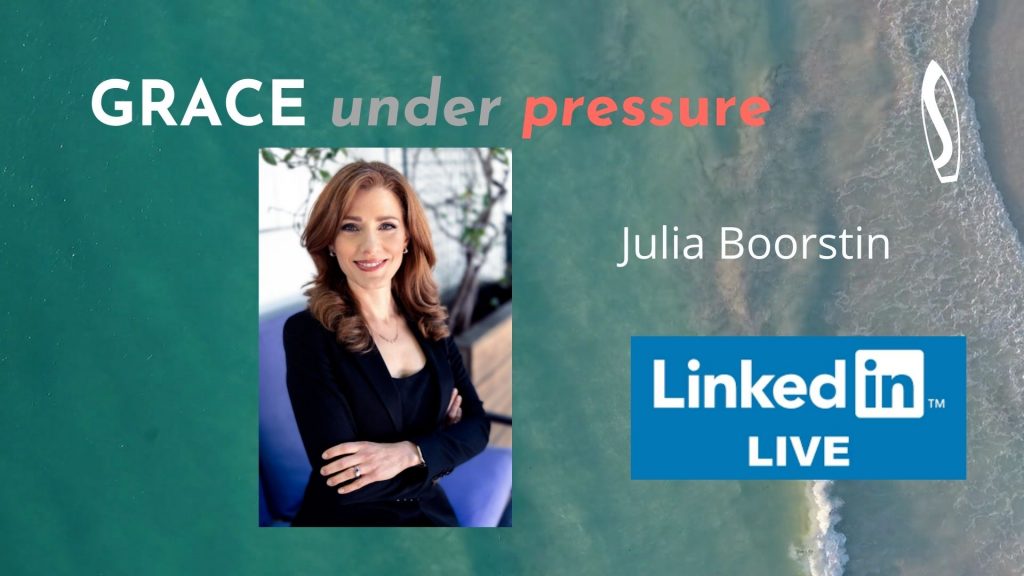
Note to see my full LinkedIn Live interview with Sally Helgeson, click here.

First posted on Forbes.com 02.00.2023

Riding into the Light of Our Times

Listen, my children, and you shall hear

Of the midnight ride of Paul Revere,

On the eighteenth of April, in Seventy-five.

These opening lines of “Paul Revere’s Ride” by Henry Wadsworth Longfellow are familiar to American schoolchildren. And so they—including me—grow up knowing the story of Paul Revere riding from Boston to Lexington to warn the Patriots that the British troops were headed their way. What followed the next morning were the “shots heard round the world,” sparking the American Revolution.

For most, however, Revere faded into quaint memory, a hero not quite forgotten but not well remembered. Fortunately, The Ride: Paul Revere and the Night That Saved America, by Kostya Kennedy, brings Revere to life fully, making him not simply a patriot for his time but a beacon for our time, too.

Bringing the legend to life

Revere was well-known in his time. Kennedy cites author Malcolm Gladwell’s depiction of Revere as a “connector,” that is, someone who met and mingled well with others, and so became a trusted resource. Everyone knew Paul Revere is a refrain that echoes throughout the book. How he became so well-known by everyone from leading Patriots like Sam Adams and John Hancock to British military officers, including General George Gage, is worthy of exploration. His traits are instructive to this day.

Connector. A respected tradesman, Revere became a Mason, a not uncommon association for Colonial Americans, including some of our Founding Fathers. He was loyal to his lodge and headed it. There, at the meetings, he became steeped in the patriot resistance to the Crown’s imposition of punitive taxes. Some of 

Innovator. Revere’s father was an immigrant from France who embraced the Colonial American ways, becoming a silversmith, a trade he passed along to his son. Revere used that skill to teach himself to become an engraver and later a dentist, fashioning implants for his patients. He also learned to roll copper, becoming a bellmaker and munitions maker during the War of 1812.

Stamina. We know Revere for his 20-mile Ride that fateful night in April 1775, but Revere made many more rides, in particular, riding to and from New York and onto Philadelphia and back to Boston, a journey of 700 miles. He was carrying messages from Committees of Correspondence discussing how they would react to ever-tightening coercive acts by the Crown. As an expert horseman, Revere had the skills to keep a steady pace and stamina to ride night and day, stopping occasionally for an overnight rest and to switch horses.

Courage. During Revere’s Ride, he knew full well that someone like him could be stopped and detained and even slain if he were caught. And just outside Lexington, he was stopped by British officers who could have shot him on the spot. When they queried him, he told them exactly where he was going and why. Honesty was his trademark, and he was not about to lie, even to save himself. The officers instead stripped the bridle from his horse, Brown Beauty, leaving Revere to walk into Lexington rather than ride. 

Citizen. Revere was a Patriot. He lived his love of country through service to the cause of Liberty, yes, but also to service to his community. He practiced this as a tradesman, a member of his church, and a lodge master—a true communitarian.

Legend for today

These traits Revere demonstrated made him a trusted man in a dangerous time. We can take from his example that we should be open to change, find ways to maximize our skills, and stand true to our values. “It was Revere at the start and center of it all,” writes Kostya Kennedy. It was Revere, booted and spurred, who raised the resistance, who helped deliver the first, fateful stand.”

First posted on Forbes.com 5.10.2025

General Stanley McChrystal on Character

Another book on character?

Yes, that’s what I thought when I saw the title of Stanley McChrystal’s newest book, titled On Character: Choices That Define a Life.

When I heard General McChrystal speak about his new book and then read it, I realized it was different from many other books on the topic. Why? Because McChrystal, a retired four-star general, combat commander and West Point graduate, has lived it. He is also not afraid to call himself out when he has been deficient.

Many will remember that McChrystal offered President Barack Obama his resignation when an article in Rolling Stone magazine about his unit featured some negative comments about then-Vice President Biden and frustration with the administration’s handling of the war in Afghanistan. McCrystal, as he had been taught to do, took full responsibility. Obama accepted his resignation.

After more than 30 years of service, McChrystal was out of a job, a career, and a life that began as an Army brat born while his father was serving in Germany. That abrupt change is character-building.

What character means

And so when McChrystal addresses what it takes to lead with character, he knows of what he speaks – as the subtitle says: “choices that define a life.” Character is the spine that steels the spine in times of adversity and heals the soul in times of trial.

The idea for the book came from Annie McChrystal, his wife, herself the daughter of an Army officer. She nudged him to put down the many thoughts he had expressed to her over many conversations. As a result, the book has a discursive feel but is also very personal.

There are three sections to the book:

Conviction – beliefs upon which character forms

Discipline – the ability to follow through on what we believe

Character – the structure of life, e.g., “what we are willing to tolerate and what we are not.”

This troika casts the notion of character as foundational, practical and resilient.

Getting personal

There is a touching part of the book, one he spoke about to Amna Nawaz on PBS NewsHour. He admits he was not a good father because he put his career first. As he said, his son started high school when he went to Afghanistan, and then he went to Iraq and Afghanistan, where his son was in college. “I wasn’t a great father,” he writes in his book. “In retrospect, I regret things I didn’t do as a father, but, thankfully, avoided doing many things I would have regretted. If I could do it all again, I believe I would be a better father, but I don’t believe Sam could be a better son.”

Fortunately, as McChrystal tells Nawaz, “The beauty is, I get a second chance, because my son lives next door to me now, along with my granddaughters. So, I see him every day. We have a very close relationship. But you can’t make up for things you didn’t do.”

That’s a measure of character—facing the reality of the past while doing better in the present. Again, these are “choices that define a life” of self-awareness, integrity and truthfulness.

One of the reasons McChrystal wrote about character—and something he has reiterated on media appearances related to this book—is his desire to promote a national discussion of the role of character in society. Character is fundamental to leadership; without it, leadership is a position without moral conviction. Character, or rather the lack of it, is on full display in our culture when we see people in positions of power advocate for themselves rather than for those they are supposed to lead.

Living character

In their book Character Is Destiny, John McCain and co-author Mark Salter write, “Our character is a lifelong project, and perhaps the older we are, and the more fixed our shortcomings are, the more we can use inspiration to encourage our escape from the restraints of our deficiencies.”

Character is not being “holier than thou.” Character emerges from the frailty of the human psyche. It is a recognition rooted in self-awareness, knowing your strengths as well as your shortcomings. With that knowledge of imperfection, you live your life rooted in universal truths and lead your life in the practice of doing better for others.

First posted on Forbes.com 7.05.2025

When Is It Time to Retire?

When is it time to retire?

Pat Caputo, a long-time Detroit sportswriter and radio host, posed this question on his radio show about the status of Miguel Cabrera, who has won two MVP awards as a Detroit Tiger. He has slugged 500 home runs and racked up over 3,000 hits, including 600 doubles.

Caputo, an award-winning sports commentator with Hall of Fame ballot credentials, wonders if Cabrera – at age 40 and with a bum knee – is more a liability than an asset. Cabrera is a shadow of the player of his Triple Crown year, hitting under .200 and unable to hit for power.

The question of retirement is relevant to us all. One factor Caputo mentioned is to consider is the issue of respect, so let’s explore it.

Pat Caputo, a long-time Detroit sportswriter and radio host, posed this question on his radio show about the status of Miguel Cabrera, who has won two MVP awards as a Detroit Tiger. 

Caputo, an award-winning sports commentator with Hall of Fame ballot credentials, wonders if Cabrera – at age 40 and with a bum knee – is more a liability than an asset. Cabrera is a shadow of the player of his Triple Crown year, hitting under .200 and unable to hit for power.

The question of retirement is relevant to us all. One dimension to consider is the issue of respect, so let’s explore it.

Respect for the game. Cabrera will make $32 million this year. That’s a lot of money, even in baseball terms. His contract was negotiated a decade ago by the late Mike Ilitch, owner of the Detroit Tigers. Cabrera was wise to sign the deal; Ilitch was foolish to offer it. Too much money for too little productivity shows too little respect for the integrity of the game.

Respect for the organization. An unproductive player on the bench denies another player the opportunity to produce for the team – on the field and at the plate. A major league roster contains 26 spots. It is up to management – general and on field – to determine when to pull a player’s roster spot. 

Respect for self. Cabrera was lean, agile, and powerful when he entered the league at 18. Twenty-two years later, he is heavy, slow, and weak at the plate. Some say that kids watching him now see an “old man,” not a graceful and gifted athlete. Is he harming his reputation by hanging on?

Stay the course

Cabrera is revered – and rightly so – by baseball fans in Detroit and elsewhere. He is the best position player I have seen in person, including players like Mickey Mantle, Yogi Berra, and Al Kaline, to name just three. In his prime, Miggy was like the big kid in Little League that no one could get out. As Caputo notes, there was a sense of electricity about his every plate appearance and a sense of joy that he radiated playing the game he loved. His enthusiasm lifted his teammates and his fans.

The counter-argument is that he is an ambassador for the Tigers, an icon representing athletic prowess and a solid team ethic. Miggy is what baseball people call a “clubhouse guy.” He is a team-first player and a mentor to younger players. That said, by remaining on the active roster, the question becomes, at one point does he become more mascot than the player, and if so, when does he make way for the next guy?

Application to leaders

Leaders, considering stepping down, can ask themselves this question: am I respecting the community, organization, and myself? It is better to answer that question for yourself in ways that respect the needs of the whole rather than have others make it for you. “Everyone should be respected as an individual,” said Albert Einstein, “but no one idolized.”

As the saying goes, Father Time does not play favorites, even fan-favorite ball players.

First posted on Forbes.com 05.00.2023

What It Takes to Build a Community

Once upon a time, community was defined by where you lived, worshipped and worked. Then over the years, as social scientist Robert Putman documented in his seminal book, Bowling Alone, the sense of community eroded. The bonds of work slowly eroded, too. People found themselves isolated and lonely. 

In 2014 Christine Porath and Tony Schwartz conducted a research study into work-life issues published in the Harvard Business Review. Their findings showed that two-thirds of employees feel no sense of community at work. 

The loss of community has stuck with Porath and she explores how we can rebuild it newest book, Mastering Community: The Surprising Ways That Coming Together Moves Us from Surviving to Thriving.

Porath, a professor at Georgetown University’s McDonough School of Business, sees firsthand how the need for community has grown. She notes that when she first began teaching a couple of decades ago, the need for civility (a topic of her earlier book) was not a priority. However, she told me in an interview that some students feared that exerting civility would make them appear less leader-like, that is soft and not tough enough to lead in business.

Enter vulnerability, partly a result of the pandemic, has challenged us to look more deeply into how we relate to one another, especially to our leaders. And with a heightened awareness of connection, the need for community grows.

The dividend

There is a business equation to fostering a stronger sense of community. When people feel connected to their workplace, there is less turnover. That fact alone could make management sit up and take notice of people’s need to be connected. In her book, Porath tells the story of a woman who ran a call center at Dell. This manager noted that people were gaining weight, so she took it upon herself to provide exercise for her employees, including hiring a personal trainer who would conduct exercise sessions at lunchtime.

What the manager did, Porath says, “drove a sense of not only connect people lost a lot of weight. They were far healthier performance went up like 25%.” Porath stresses that this manager was not a senior executive; she acted on her own to foster better conditions for employees.

Nurturing community

Intrinsically at work, the need for community is powerful. Leaders nurture this connection by showing respect for employees, valuing them as contributors, and being candid with them about their performance. Bottomline says Porath, “You are making people feel like they belong. I think that that’s crucial. I think the idea of making people feel valued. One of the things that always surprises me, particularly when I get into research, is that people don’t receive thanks.” Showing gratitude says Porath is free and “can be done easily.”

With a sense of community, “people feel this greater sense of thriving. They tend to perform better objectively as rated by bosses. They’re far healthier. They have much less burnout. I think that there are a lot of potential outcomes [for the community] that speak to a much happier, more productive workforce. That’s much more likely to stay” with their employer.

What community enables

Work takes up a considerable amount of time. Rather than viewing it as something I go to, research by Porath and others shows that it can be something I “belong to.” The sense of belonging heightens our ability to cooperate with others and collaborate in ways that enable individuals and teams more than they had expected. Community nurtures the bonds that bind us in ways that employees find more fulfilling and employers can find more rewarding.

First posted on Forbes.com 00.00.2022

Patrick Stewart Gives a Lesson in Bravery

When Patrick Stewart was completing his two-year acting course at the Bristol Old Vic, the director of the Theatre School admonished the young actor. “Patrick, you will never achieve success by insuring against failure.”

Decades later, as Stewart (now Sir Patrick) revealed to Sam Briger on NPR’s Fresh Air, “I’m braver than I was when I was 35. I am not averse to risk-taking. And I don’t judge myself. I used to do that so much. Ah, Patrick, that’s not good enough. That’s not good enough. You could’ve done that differently. You could’ve done it better. That gets in the way of spontaneity and real feeling coming into something. So I’m braver now than I was when I was much younger.”

In this quote, Stewart reveals how bravery enables individuals to take risks and overcome self-doubts.

Brave choice

Discussion of bravery among actors may strike some as silly. After all, they are hired to play characters, fictional or real. What’s so tricky about that? As every actor knows, there are many ways to play a role. The best actors look deep into themselves to find some connection and then utilize their technique to evoke the part – either once for a film or TV show or months in a stage production.

Bravery involves the choices an actor makes. And indeed, there is something leaders can learn from such choices. Leadership, at its core, is an act. It is not dissembling; it is getting to the truth of the matter through words and actions. Leaders, like actors, achieve little by themselves; they need the company of others to achieve great results. [Even solo performances require a team of others to produce.]

Giving life to choices

When it comes to making big choices, leaders must assert bravery in the face of self-doubt. Second-guessing oneself, as Stewart revealed in the above quote, erodes self-confidence. 

What needs to be done? Leaders read the situation. What must be done forms the basis of strategy regarding what an organization must do to serve its stakeholders? What a company does is in response to the needs of others.

How is it to be done? Wise leaders step back from execution on one way. They delegate the how to the people who are doing the work. Failure to do so is micro-management. 

What do we do next? The combination of what has been done and how it has been done dictates the next steps. If one or both are failures, then it is time to revisit assumptions and modify execution. However, wise leaders continue to evaluate to ensure continued positive outcomes even in success.

Self-evaluation

It is always essential to examine your decision-making. Doing so with a trusted colleague can be enlightening. Such evaluation, however, cannot drift into “analysis-paralysis.” It is the role of a leader to push one.

Whatever the choices are made, it is up to the leader and others to execute. Time will tell, as it does in acting, whether the choice was the right one or not. But in the moment, it requires the leader to make the best call she can and live with the consequences. Bravery, indeed.

Famed acting teacher Stella Adler once said, “The word theatre comes from the Greeks. It means the seeing place. It is the place people come to see the truth about life and the social situation.” Revealing the truth often requires bravery. And that’s what leaders must do. Deliver the truth as best they can through their words and their actions.

First posted on Forbes.com 3.00.2022

Sally Jenkins: Lessons on Work and Life

Writing about lessons learned from sports is something I have been doing for a few decades. The games and the athletes who play them provide insights into preparation, play, and conduct – on and off the field. The coaches who manage the teams best connect individually to players and collectively to the group so that every athlete is focused on what they need to do to win.

Few know the world of sports better than Sally Jenkins, a long-time columnist for the Washington Post and New York Times best-selling author of a dozen books, including her newest, The Right Call: What Sports Teaches Us about Work and Life. And to me, the subtitle sums up the book’s intentions – provide lessons to enable us to achieve our best.

Sports lessons

Jenkins quotes her father, the legendary author and sports journalist Dan Jenkins, saying, “Real sports is not for kids.” By that, her father means their impact on those who play the game. “Who can describe the athletic heart?” Jenkins senior asked. Her new book explores that question in detail. Essential elements of athletic success include conditioning, practice, discipline, candor, culture, and learning from failure. 

In a recent interview, Sally Jenkins told me that athletes are as flawed as human beings as anyone. Citing her father’s insights, Jenkins said athletes show “a deep intelligence at work. It’s not the type that we tend to think of, but there’s a deep, deep, deep intelligence and commitment at work in these athletes that’s, that’s really worth studying closely and drawing the right lessons from them.”

Accountability is critical to team success. Jenkins, who wrote a biography of Pat Summitt, the legendary women’s basketball coach at the University of Tennessee, says, “Pat told me once that there’s a language that a championship team starts to speak to each other. She said, you can hear it, you can hear it. When a champ, when a team’s getting ready to win something big, you can hear it in the way they talk to each other. And I said, well, what does that sound like? And she said, well, it sounds like I’ve got you, I’ve got your back.”

Leadership lessons

Citing the work of Robert Hogan, social psychologist and founder of the Hogan Assessments firm, Jenkins says that, too often, organizations measure leaders by their results. That overlooks something important: how their people regard them. “Pat Riley, the president of the Miami Heat, has a great description,” says Jenkins. “When people don’t trust the leader and the leader’s decisions, they will start ‘subtly gearing down their efforts.’ [They will] enroll everyone else in their own cycles of disillusionment or disappointment.” This observation explains “why charismatic, aggressive leaders at the top of an organization, but the organization can be so mediocre.”

Leaders who succeed need to set standards. Jenkins recalled Pat Summit telling her, “As a leader, you have to start tough, and then you can get a little nicer. But if you start nice and then try to get tougher, people really don’t trust it, and they won’t go with it, and they won’t understand it. So, you know, you have to establish the standard at the outset, and you really can’t waffle on it.”

“It’s not enough for a leader to have strong intentions,” writes Jenkins in her book. “Others have to perceive you as having good intentions.” Or as Tom Brady, whom she quotes, puts it, “If you don’t care about the people you work with, you’re hosed.” Athletes play an inside game to put themselves into a position to lead by example and service their teammates and the game itself.

Life lessons

Sports are not the same as real life. Sports are about boundaries on the pitch, limitations to time, choice of equipment, and the ever-present eye of referees. Defined outcomes are what sports are about. Seldom is that the case for life itself. Yet we can draw great lessons from the athletes who play the games we love to watch.

“Most people think that dealing with pressure is about actually rising to an extraordinary level, when in fact, the people who really succeed in things, what they’re good at is.. being themselves in the moment. They are doing what is so well-practiced and grooved in them. Their performance is not deteriorating under pressure like other people’s performances.”

This distinction, says Jenkins, is “critical for the rest of us [when] we think we’re supposed to do something extraordinary. No. Do what you’re best practiced at and what is most natural in the moment to you. Be yourself in the moment, and that will be good enough.”

For my full LinkedIn Live interview with Sally Jenkins, click here.

First posted on Forbes.com 6.14.2023

What to Say When a Layoff Looms

Okay, time to dust off those presentations. The ones you used in 2008 as the Great Recession hit. 

No one is predicting another “great” one, but a recession may be on the horizon. Inflation, rising fuel prices, capital costs, war, and famine will make this recession global. As a result, companies will have to adjust, and for some, that will mean layoffs.

The generation that has joined the workforce since the Great Recession has not experienced a recession. Many younger managers are now in management. They need counsel from more senior leaders who have lived through them. 

On a personal note, I recall a meeting just before the Great Recession where a veteran manager raised his hand to note he had experienced seven recessions in his work life. Managing through recessions are part of leadership, so now is the time to prepare your communications. What you say and how you will say it will make a big difference to your team.

It is essential to deliver a sense of hope. “Hope is important because it can make the present moment less difficult to bear,” wrote the late Thich Nhat Hanh. “If we believe tomorrow will be better, we can bear a hardship today.” 

Here are some suggestions.

Play it straight. When you deliver your remarks, do it personally. Either in person or over video. Be direct and to the point. The audience wants you to say no worries, everyone has a job, and all will be well. Giving false hope is deadly; it shows a lack of respect for the employee. 

Provide resources. Affirm the value of the employees. Their contributions have made your company strong. Now is the time to recognize their efforts. Make an effort to provide them with new opportunities within the organization. If not possible, work with an outplacement firm. 

Point to the future. Layoffs are not the end of a business. They may even be opportunities to focus the company on value-added segments rather than value-detracting ones. In addition, opportunities to pursue new lines of business with new products and services may arise.

Avenue of hope

There may be a silver lining in this recession. The war for talent remains fierce. Millions of jobs are going unfilled, so those laid off will find opportunities to find new jobs. And they may not have to relocate. Virtual work teams are a reality. 

Recessions are not to be taken lightly, but they are to be expected and endured. How a company treats its workforce in times of crisis will be how it prepares itself for the future. “Things turn out the best,” wrote legendary basketball coach John Wooden, “for the people who make the best of the way things turn out.”

First posted on Forbes.com 7.21.2022

Three Good Words of Recommendation

What would you say if you had to give a recommendation for an executive being considered for a new leadership role?

A colleague of mine was presented with this challenge and, on the spot, came up with three simple words to describe this individual.

Integrity. Intellect. Inclusion. Call them the three I’s. Let’s take each one at a time.

Integrity. Trust is the watchword of leadership. Integrity comes down to honor, that is, acting honestly because it is the right thing to do, not merely because it makes you look good. Goodness embraces courage, too. Honest leaders live by a moral code; it is their spine, their backbone.

Intellect. You have to have smarts to lead others. Intelligence does not come from having attended the “right schools.” Intellect is the ability to reason, to use logic to cipher the issues dispassionately. Intellect, in a broader sense, is “street smarts,” the ability to know how the world works. It requires an ability to read people, to ascertain what they want and why they want it. Leaders need to be savvy, separate the unimportant from the important, and focus on what matters most to accomplish things.

Inclusion. This word sums up the reality of creating a culture where people feel wanted. Inclusion gives meaning to diversity and impetus to equity. It is one thing to hire women and minorities; it is another thing to provide them with the proverbial seat at the table. Equity emerges when people at the table reflect society at large and have the opportunity to prove themselves. This action is what it means to be inclusive.

The importance of character

These attributes – integrity, intellect, and inclusion – form the foundation of what we want our leaders to demonstrate. Other attributes also come to mind – commitment, courage, and compassion. You can argue that these and others might be found under the umbrella of a single word – character.

“The best index to a person’s character,” said Abigail Van Buren (aka Dear Abby), “is how he treats people who can’t do him any good, and how he treats people who can’t fight back.” This quote by the legendary advice columnist illustrates the true meaning of character. You act for others because it is the right thing to do.

Fleshing this notion can be found in the words of the Roman senator and orator, Cicero. “It is not by muscle, speed, or physical dexterity that great things are achieved, but by reflection, force of character, and judgment.” This is where intellect enters. Thinking, deliberating, and evaluating all require a degree of intellectual horsepower and a healthy dose of integrity.

“Perfection of character is this,” said Marcus Aurelius. “Live each day as if it were your last, without frenzy, without apathy, without pretense.” In other words, you need to keep working on it. Therefore, focus on what it means to live with integrity. Keep your intellect sharpened by observing, reading, and reflecting. And practice the principles of inclusion by looking to embrace ideas and support the actions of people different from yourself.

First posted on SmartBrief.com 6.14.2023

Taking Away the Pedestal

“We study Lincoln not because he was perfect,” writes Jon Meacham in the Prologue of And Let There Be Light: Abraham Lincoln and the American Struggle. “But because he was a man whose inconsistencies resonate even now.”

Therein lies the equation that those of us who work with and write about leaders. But, of course, none are perfect, and when we put them on pedestals, we do two things: one, diminish the leader’s humanity because we put halos on their reputations; and two, reveal our blind spots. [I have fallen prey to this syndrome myself, having written glowingly of men in power who, upon reflection, proved themselves less than worthy. One of whom was Rudy Giuliani.]

It matters because when we view our leaders as infallible, we give them the benefit of the doubt when it may not be warranted. We view them as above us and, therefore, unworthy of our critiques. In reality, they need us more than ever. A leader who sees no faults in themselves is a leader who can never be trusted. Good leaders I have known are aware of their shortcomings and labor mightily to overcome them. They also welcome open dialogue as a means of finding the essence of an issue but also as a means of testing assumptions.

What we owe the leader

We, followers, can do our leader a service if we do the following.

Challenge assumptions. The person at the top may often be the least informed. One reason is that individuals below hide bad news, so only good news filters up. This practice leads to faulty thinking that can lead to assumptions without basis. Come to the meeting prepared with facts to support your position.

Respect the position. Understand that the person at the top has many responsibilities. View your role as one of support. You want to help the executive succeed so the team can achieve its objectives. One technique for presenting an opposing idea is to ask the executive to weigh in on an idea and explain why. In working through the argument, there is the opportunity to discuss the pros and cons of the issue.

Support the final decision. How often have you seen staffers walk away from a critical decision-making meeting only to tell or text others that they disagree and will not support the conclusion? Right then and there, alignment dissipates, and follow-through on execution becomes more arduous. So differ, yes, but keep the final decision.

What the leader owes us

These steps are only possible if the leader is a boss who is open to others and seeks only his own counsel. You may want to raise issues, but you must be very careful. Distrust bubbles deeply within a boss because they are not the smartest in the room but certainly the most insecure. “To add value to others,” writes John Maxwell, “one must first value others.” Failure to find that value walls the leader off not just from critics but from the contributions of others.

We are all frail creatures, but we are not fragile. On the contrary, we have strengths that can sustain us when it is time to lead and when it is time to speak truth to power.

“Lincoln,” writes Meacham at the end of the prologue, “was not all he might have been – vanishingly few humans are – but he was more than many men who have been… And, as Lincoln himself would readily acknowledge, we can always do better.”

Good advice for anyone who leads and all of us who follow.

First posted on SmartBrief on 5.08.2024