David Novak: Coaching Yourself to Self-Improvement

We like to think of CEOs as creatures of success, but doing so misses the bigger picture.

It takes hard work, determination, and the ability to connect with others to be considered for the top slot. But, once attained, the pressure to perform intensifies. David Novak knows all about this challenge; he was the CEO of YUM Brands for ten years. He had his share of successes, but now that he is retired from that position, he focuses on something else: developing new leaders through his coaching, podcasting and his leadership consulting.

His newest book is, Take Charge of You: How Self-Coaching Can Transform Your Life and Your Career, co-authored with Jason Goldsmith, and it’s an inside look (okay, pun intended) about what it takes to know yourself so you can perform at your best. In the book and an interview with Emily Bobrow at the Wall Street Journal, he is candid about his shortcomings. “I was too in love with my own idea, and I moved too fast on it,” he says about a product he introduced at PepsiCo, Crystal Pepsi. “10 Worst Product Fails of All Time,” noted Time magazine.

That hiccup did not hinder his progress. When Pepsi spun off its restaurants, Novak became its president and, in 1999, its CEO. Before he stepped down in 2016, both Barron’s and Harvard Business Review had named him one of the best CEOs globally. Still, Novak says, “People know how you’ve gotten your success, but they don’t know how you failed along the way.”

Self-coaching process

In an interview with me, Novak said, “I have self-coached myself throughout my career. Part of that is understanding you are who you are.” Self-improvement is possible. “You should work on being a lot better, but you cannot be somebody else.” 

Essential to success is finding purpose. “The key to finding your purpose is to unlock what it is that, that gives you passion, what it is that gives you joy, what it is that  makes you happier as you pursue what your goals might be in your life.” For this reason, Novak and co-author Jason Goldsmith included exercises for self-discovery in their new book.

Purpose should include a term Novak calls a “joy builder.” “There’s a reason why people say you should love what you do. If you love what you do, [the saying goes], you’ll never have to work another day in your life… When you love something, you want more of it; you can’t get enough of it. And that makes you a better learner.” Joy does not preclude hard work and when you love what you do, working hard reinforces the notion that you are fulfilling your purpose.

Assisted self-coaching

“When you coach yourself, it doesn’t mean that you exclude others,” says Novak. “What it means is you understand who you are, where you want to go, what your single biggest thing is next in your life. Then you develop an action plan to get there.” Once that plan is developed, then you “go find the ‘assistant coaches’ who can help you get there.”

One person Novak sought feedback from was Warren Buffet. “He encouraged me to talk about the things that could go wrong in the business, as well as the things that were great. And he said that would engender more trust with investors.” Novak followed this advice closing his generally positive presentations with one or two things that could go wrong. Investors appreciated this straight talk and, upon occasion, would downplay the negatives themselves.

Dealing with adversity

Setbacks are part of life. Novak says it’s important to address them and shift the mindset from “not” to “not yet.” For example, if you have a goal in which you fall short, you shift from “not accomplished” to “not yetaccomplished.” Experience teaches us lessons as well as humility. “You don’t know it all because… you do make mistakes, and you learn from those mistakes.”

Gratitude is a good buttress for moving forward. “We make our best decisions when we’re grateful and our worst decisions when we’re angry and tired and resentful. It’s so important to move yourself up that mood elevator and get into that state of gratitude.”

Reinforcing the sense of gratitude is taking inventory of your accomplishments, something Novak calls “personal highlight reel.” Sometimes you can reinforce those highlights with objects – photographs, awards, plaques – that you can put in a place of honor, which Novak says, referencing a term his father used, as a “love me” corner.

“You are never as good as you think you are or as bad as you think you may be,” goes an old saying. I would add that you can get better if you are willing to take a hard look at yourself, admit your shortcomings, and focus on what you do well to become even better.


First posted on SmartBrief.com 3.24.2022

How to Create Real Community

What do employees value most about their companies? According to a recent McKinsey & Co. study, the top three reasons are:

·      Valued by the organization,

·      Valued  by their manager, and a

·      Sense of belonging.

And not far behind is the need for “having caring and trusting teammates.”

When one or more of these four elements are missing, employees are tempted to look elsewhere. As Tiffani Bova, a global technology evangelist with Salesforce, writes in Fast Company, “The writing is on the wall: Investing in your people starts and ends with listening to what they value most about working for your organization.” Ms. Bova, the author of the best-seller Growth IQ, adds, “creating a culture in which technology can be viewed as an impactful teammate means more human interaction and engagement from your entire organization.”

Having the right tools in the right hands is essential—but as the McKinsey survey that Ms. Bova cites—it comes down to people connecting to people, that is, “relational skills.” Invest in them.

Investment takes the shape of technology that enables people to understand their jobs better and remain in close contact with colleagues, especially when working remotely. There is another element, however, that offers real differentiation. 

More than a place to work

Regard your workplace as a community. Communities by nature are places where people feel they belong. It is more than a place to work; it comes a place to be.

Father Greg Boyle, a Jesuit priest, has taken the sense of community to new heights with the organization he founded in East Los Angeles in the late-Eighties. It’s called Homebody Industries, and its purpose initially was to employ ex-gang members. 

What binds the community together, as Father Boyle writes in his newest book, The Whole Language: The Power of Extravagant Tenderness, “Homeboy is a place of grace and chaos—where joy is always waiting in the wings.”

Homeboy Industries, now the largest gang intervention program globally, is where men and women who have led lives of crime—most often because they were victims of abuse and abandonment——can feel a sense of belonging. “It is only belonging, and not mere inclusion, that fully arouses bravery in others. You start with a broken heart and remove what encases it.” Doing such takes great courage and what homie calls “tenderoni” – love, compassion and tenderness.

What Homebody teaches

The lessons of Homebody Industries show the power of caring. And as such, it can teach other organizations, which have far more advantages, powerful lessons.

Lay down your baggage. Each of us is an accumulation of successes as well as failures. We have our quirks and our moods. When you belong to a community, you are not your resume. You become a fellow contributor.

Find ways to work with people, unlike yourselves. It is not uncommon for homies who once belonged to rival gangs to work together. It is never easy, but within the Homeboy, culture learning to get along is vital to becoming a whole person. 

Build trust by showing trust. Of course, we want others to trust us, but how often do we wait for the “other person” to make the first move. Better to show others who you are first. Be open with them. Give them the benefit of the doubt.

Respect is fundamental to each step and essential to building a solid community. We reinforce respect through our actions—-assisting, listening, and caring.

Doing these things make colleagues feel wanted, recognized and respected. Just as we may receive in return.

First posted in SmartBrief on 3.04.2022

Muscle Your Talent for Success

“In those summers at camp I began to learn to push past exhaustion and to think on my feet, and to become slowly aware that weariness and exhaustion were the twin sirens of the theatrical deep. Let them take over and they will rob one of courage and the ability to improvise in a crisis, for stamina in the long run is as necessary as an adjunct to success in the theatre as talent itself.” 

So wrote Moss Hart in his memoir, Act One. Hart, one of 20th century theater’s most successful playwrights and directors, learned his craft through hard work. In this passage, it was a stint at Camp Utopia, where he was social director and responsible for entertainment, that he learned how to get past fatigue as a matter of doing his job.

Hart also learned, as he writes in a preceding passage, “that talent by itself is not enough, even an authentic and first-rate talent is not enough, nor are brilliance and audacity in themselves sufficient. There remains the ability to translate that talent, whether it be for acting or playwrighting, into terms that fulfill the promise of a play so that the performance succeeds in realizing the full measure of its potential.”

Focusing on the goal

Hart describes the need to maintain discipline and focus on thegoal. Talent alone is not enough; application of talent through dogged persistence and the acquisition of skills is what is necessary. 

I recently spoke with songwriter Emily Falvey, who has an office on famed Music Row in Nashville. She goes there daily and writes songs. Sometimes solo but other times with another artist or two. I asked Emily how many songs she writes per week, and she said between five and eight. The trick, she says, is to exercise your creative muscles. The more you use them, the stronger (and better) you can become.

Lessons from Moss Hart are passed down to Emily Falvey and serve as measures of the commitment one must apply to succeed, not merely in show business but any endeavor.

Sometimes those who have succeeded in school think their academic learning will enable them to coast into career success. In reality, anyone who manages such folks knows that schooling is step one. The rest comes from application to the task. In Moss Hart’s words, the “ability to translatethat talent” produces something of value – a product, a service, or a work of art.

Seldom a straight path

Of course, talent and hard work do not guarantee success. Adversity often intervenes, which can result in failure when it does. The challenge is to learn from failure, not let it define you. “Self-pity,” Hart writes in Act One, “is not a pleasant emotion and is a fruitless one as well, for its point of no return is an onset of black despair in very short order.” 

Not every play Moss Hart wrote was a success. Not every song that Emily Falvey writes will be a hit. The challenge is to adopt an attitude of humility, the willingness to learn from mistakes. Learn from what went wrong as a means of learning how to make things better.

First posted on Forbes.com 9.14.22

Don’t Get Sick the Next Time You Win

Recently I came across a term about the Japanese attack on Pearl Harbor that is new to me – “Victory Disease.” As Mark Loproto writes on the website PearlHarbor.org, “Victory Disease is used to describe what happens when a nation allows a series of victories to lead them to complacency or arrogance.” 

Such was the case with the Japanese military in their victory in the Hawaiian Islands. Rather than consolidate territorial gains, they remained aggressive in their expansionist moves. The result was the Battle of Midway, where three of their four leading carriers and other warships were sunk. After that, the expansion was over; contraction began, though it took three more years of heavy fighting and heavy losses on both sides for the Allied defeat of Imperial Japan.

Victory Disease is an apt term for actions resulting from overconfidence that lead to defeat. It is something that many companies, both established and startup, suffer from time to time. Because the enemy learns to adapt – or the situation changes – what worked before will not work again. It is time for new tactics.

Marshall Goldsmith addressed this condition in his mega-bestseller book, What Got You Here Won’t Get You There. It focuses on habits or behaviors that prevent successful people from achieving their intentions; among the bad habits are being judgmental, dismissive, overly self-absorbed and assuming, and failing to listen and show recognition to others. These bad habits prevent individuals from being more thoughtful, wiser, and successful.

Getting smarter

Borrowing Marshall’s insights and the concept of Victory Disease, how can you keep from letting your wins get in the way of your thinking? Here are some suggestions.

Why did I succeed? Examine what you did to achieve your objectives. Analyze what went right and what went wrong. Ask trusted associates to help you diagnose your reasons for success. 

What could I have done better? Yes, things go right, but they can go wrong, too. So what can you learn from the missteps that you have made? Examine your assumptions. Were they correct, or did you fail to test them adequately?

What will I do better the next time? Plan ahead for mistakes. Think through what you will do if they occur. Better to prepare for what could go awry rather than letting it surprise you. Preparation is your guard against overconfidence.

Avoid too-high highs

Winning produces high, elated feelings. Yet, as every successful knows, winning can hide many flaws. The same applies to us as individuals. Therefore, we need to be mindful of our successes. Honor them, but do not revere them. 

When Roman generals returned to Rome after great victories, they were honored with parades. Often an enslaved person was positioned next to the general in his chariot. As the crowds cheered, the enslaved person would utter Momento mori (“Remember, you will die.”) Or as another Latin phrase goes, Sic transit gloria. (“All glory is fleeting.”)

Remain vigilant. Success does breed success, but it can also breed hubris, which gets us into trouble. Doing so will enable you to celebrate your victories without getting sick.

First posted on Forbes.com 3.08.2023

Deepa Purushothaman: Voice for Change


A conversation with a friend about the difficulties women face when loading luggage into overhead compartment bins on airplanes got Deepa Purushothaman thinking about how women do not seem to fit into a world designed by men. She is 5’1. She is also Indian American who understands women like her do not fit into the corporate world.

This realization led Purushothaman to look at how the struggles that other women of color – educated, talented and successful – face in the workplace. As the first Indian American to make a partner at Deloitte, she knew the situation first-hand. Her story, and her interviews with over 500 women of color, is told in a new book,The First, The Few, The Only: How Women of Color Can Redefine Power in Corporate America.

Challenges facing women of color

Purushothaman, in an interview with me, revealed that too many minority women internalize the problem to feel that the problem lies with them, not the organization. 

She tells the story of how when she made partner, a white male colleague, who also had made partner, told that her career (unlike his) was assured because she was a “twofer”–a woman and of color. “It really speaks to how for women of color we can be kind of going about our business and things are said to us or around us… [that] make us feel like we don’t belong. There is a real questioning of our worthiness.”

Women of color often face extra scrutiny and pressure. For example, one of the women Purusothaman interviewed said, “I feel responsible for representing my entire race with all my white colleagues. Cause I’m the only black person that many of my white colleagues have ever met. And so I edit what I wear, what I talk about, what I eat, how I wear my hair. And she went through this long list and hadn’t really realized the weight of what that was.”

Feeling more pressure

Being in the minority can be stressful. “Two of three women of color that I interviewed had mysterious illnesses. And I think it comes from not being seen and heard in structures. I think it’s the weight of what is happening to us… Some of the research that we have done suggests that for women of color, there’s an element of trauma and at real heaviness around the weight of balancing all these things that is very different and showing up very differently in our bodies.” [These conclusions are consistent with other research on the physical toll that bias exacts in the workplace.]

Code-switching — adopting a persona of what’s expected in the workplace — is commonplace. It is also exhausting. Purushothaman likens it to speaking in another language, something she did when worked in Latin America. 

Because there are fewer role models, some women of color cannot imagine themselves in more senior roles. “Then when you end up in these corporate structures and you’re told to be more assertive or more aggressive… or less emotional… [These things] reinforce that leadership looks different than us.” All of which adds to levels of apartness as well as stress.

Corporate leaders are receptive to the ideas of change, but as Purusothaman says, “You can’t just hold [a meeting] and say, tell me how you feel, and then everyone’s going to magically share. A lot of our HR processes are not set up to take in discrimination or [permit] people to report racism.” And if cases are reported, there can be “retribution and sidelining.” 

On a positive note, Purushothaman told me that executives who have received early copies of the book are reaching out to her seeking her advice on how they and their companies can better address the issues facing women of color.

Reimaging power

The final chapter of The First, The Few, The Only is titled “The New Rules of Power.” Purushothaman’s view of power is an inversion of stereotypical views; this “new model” of power is one directed for the benefit of others not simply themselves. “The women I met are ambitious. They do want power, but they want power, if it’s helpful, if it’s a multiplier, if it’s positive, if it’s altruistic… and if it’s community-oriented.” 

As Purushothaman says, “we can remake power, we can remake leadership, we can redefine success. We don’t have to the models that come before us, but we have to do some work to get there because again, the things we are taught I think are flawed and need to be remade.”

Purushothaman believes there is no one-size-fits-all solution to the discrimination women of color face in the workplace. Instead, what is required is a sense of psychological safety for women of color to feel free enough to speak openly and honestly and for those in positions of authority to listen and find ways to make positive changes.

First posted on Smartbrief on 4.082022

Chad Lawson: Connecting Through Music and Words

As he begins a concert, pianist-composer Chad Lawson asks his audience to engage in a breathing exercise. His purpose is not to get the audience to meditate but to participate in the experience: to enjoy the music more fully.

As Lawson told me in a recent interview, people come to his concerts after a busy day of activity. Suppose they plop down into the seat and wait for the music. Their minds are not where their bodies are. Instead, they focus on what they have done or must do next. By taking a moment to relax and reflect, they prepare themselves to enjoy the concert.

Such a perspective is something that so many of us need to practice. My colleague, Donald Altman, author, and psychotherapist, speaks about the need for the pause. You need to disengage and re-engage. Let your mind catch up with your body. Doing so enables you to concentrate on what comes next.

Podcasting

Focusing on the here and now is also a theme of Lawson’s other work. He is the creator and host of a virally popular podcast, Calm It Down, which has logged two million downloads. Developed during the Covid lockdowns, when Lawson was off the road and had to remain home, he sought a way to keep in contact with his audiences. These podcasts weave music into his narration. There is a sonority to both that encourages people to sit back and listen and, yes, learn.

These podcasts, typically running under 30 minutes, are soothing with a touch of occasional whimsy. Two recent titles, “You are not a fish” and “Comfortably numb,” are examinations of what it takes to assert one’s self-worth as well as to be comfortable in your own skin.

Empathy is a central theme in Lawson’s work. While Lawson studied at the Berklee School of Music in Boston, he says, “One of the biggest things I’ve always accredited my career to is waiting tables. I waited tables for 15 years.” What Lawson learned was anticipating the needs of restaurant patrons. “If I’m waiting tables with someone and I notice their drink is low, my role is to refill that drink before they ask. Because if they ask, it’s too late. I’m trying to look at their needs without them addressing me and hopes of those needs being met.” Empathy in action.

Music speaks

Music, as Lawson says, speaks to us differently. It reaches our emotions, yes, but also connects to our physiology. Listening to music raises levels of dopamine, serotonin, oxytocin and endorphins – the so-called happy hormones.

Lawson likens what music does to meeting a friend or going for a walk in the woods. “You feel better, and that’s what these happy hormones are.” In short, says Lawson, “You literally could just lay there, hit play on some calm music, and begin to feel better. And this science was proving it.”

Lawson’s newest album, featuring solo piano as well as piano and orchestra arrangements, is called breathe. This album, born during the lockdown period, is melodic and soothing. For Lawson, the melody is where his heart is. He likes to build his compositions on one musical phrase, then another, and another until he finds the blending that communicates authentically.

Space between us

In music, composers from Wolfgang Mozart to Miles Davis liked to speak about the space between the notes and where the theme occurs. “Between those two notes,” says Lawson, “is where the magic actually happens because you hit a note, the listener is hearing it, but it needs to resonate.” 

Connection is a theme in Lawson’s work, whether via podcast or music; his work seeks to build bridges for us to gain clarity in our own lives as well as to complement the lives of others in our social space. 

Note: Listen here to the entire LinkedIn Live interview with Chad Lawson.

First posted on Forbes.com 12.00.2022

Ayse Birsel: Designing Life for Love, Well-Being and Friendship

“Fifty years ago, living into one’s seventies was considered the mark of a long life. Today, seventy feels young, eighty feels normal, and ninety is within reach.”*

Longer life is a gift that previous generations did not have, so it challenges how to live it with purpose and joy. Longer life is a gift that previous generations did not have, so it challenges how to live it with purpose and joy.  Planning for the latter part of your life is not simply about preparing for what’s next. It is about applying your problem-solving skills used in your current life to create an even more enriching future.

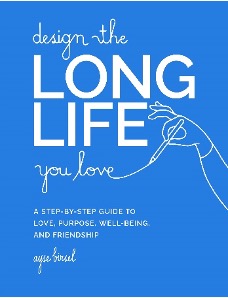
Ayse Birsel explores this idea in her new book, Design the Long Live You Love. The book is based on workshops for those over 65 that Ayse conducted with research partners at Amazon and the SCAN Foundation. An award-winning industrial designer by trade, Ayse applied the discipline of design to teach elders how to apply the discipline of design to their personal lives. (It’s an approach she used in her earlier book, Design the Life You Love.)

Ayse told me in a recent interview that a designer is a problem solver. Their approach must be optimistic, holistic, empathetic, and collaborative. “These are all the principles of thinking like a designer. And what they do is help us reframe our situation. So when we think of design as a problem-solving discipline, these are all the tools you can use or the principles you can use to solve problems.”

Creating possibilities

This way opens the mind to possibilities that may be tried, experimented with, and eventually implemented. “So you ask what-if questions, which is all about opening your mind and saying, well, what if this is an opportunity? And that moves you [away] from a space of fearing the future to thinking about ideas and being excited by ideas and potential solutions.”

Fundamental to the book, as Ayse explained, are four concepts:

Love – opening your heart to others and yourself;

Purpose – discovering what you want to do now in the latter part of life;

Well-being – keeping yourself engaged mentally and physically (even with limitations); and

Friendship – making connections with new people.

Purpose is something that may be re-learned, says Ayse. For example, people reaching mid-life may ask, “What’s the meaning of my life?… That’s where you need to dive into self-made purpose. And as we get older, we get better at creating that self-made purpose. And one of the keys [to doing that] is helping others.”

In the research, Ayse never heard people say they were too old. “We had some people who were [in their] the late eighties and early nineties. When we invited them to come to design their life, none of them said, ‘Hey, aren’t you too late to ask me this?’ They were, ‘Yeah… We never know how long we will live, but we are all wired to want to design our life and do something that brings us joy.”

Social isolation is a problem, particularly for older people. A solution? “You seek friendship factories.” These “factories” can be volunteer activities, book clubs, and group events. What is essential is a willingness to participate. When they do, people find that they help not only themselves but others, too. Assisting others invigorates the mind, body, and spirit.

Putting design to work

As a designer, Ayse is about practicality. In her design work, she conducts warmup exercises to prepare herself to work. You can apply the same kind of warmup to design your life. Begin by thinking about what makes you happy. “Then you can draw it. You can take a picture of it. You can send it to a friend and say, ‘Hey, these clouds made me happy. I wanted to share it with you.'”

Designers are doers, and so too can we be when we apply skills we have to ponder, deliberate, and illustrate with our drawings or the pictures we take with our smartphones. Sharing them leads to the design application of collaboration. Enlist others to help us on our journey of renewal and discovery.

As we age, the challenge arises about integrating purpose into a life that may — or may not include employment — and can with creative planning and design include love, health, and companionship. Doing so, as Ayse advises, is fundamental to finding meaning and fulfillment.

*From a media release about Design the Long Life You Love.

Note: Here is a link to the full LinkedIn Live interview I conducted with Ayse Birsel.

First posted on Smartbrief.com 1.10.2023

How to Make a Good First Impression

For most Americans—even those who follow British politics from a distance—Sir Keir Starmer is an unknown quantity. Now, he is the country’s newest prime minister, ousting the Conservative majority that ruled for the past 14 years. Starmer, a human rights lawyer with working-class roots, shepherds a huge Labour majority that will ensure his party has the political muscle it needs to enact its agenda.

Starmer’s first speech as PM was a stellar example of how to communicate directly in compelling, candid, and compassionate words. For that reason, this speech is worthy of dissection.

Be Candid about What’s Next

Starmer was direct and to the point and did not pull any punches.

“Now our country has voted decisively for change, for national renewal and a return of politics to public service.

“When the gap between the sacrifices made by people and the service they receive from politicians grows this big, it leads to a weariness in the heart of a nation, a draining away of the hope, the spirit, the belief in a better future, that we need to move forward together.

“Now, this wound, this lack of trust, can only be healed by actions, not words. I know that. But have no doubt that the work of change begins immediately. Have no doubt that we will rebuild Britain with wealth created in every community.”

Make the Message Compelling

Starmer sketched out what his government intends to do, reiterating his campaign messages.

“But we can make a start today, with the simple acknowledgement that public service is a privilege and that your government should treat every single person in this country with respect.

“For too long now, we’ve turned a blind eye as millions slid into greater insecurity. Nurses, builders, drivers, carers, people doing the right thing, working harder every day, recognised at moments like this before, yet, as soon as the cameras stopped rolling, their lives are ignored.

“I want to say very clearly to those people, not this time. “Changing a country is not like flicking a switch. “The world is now a more volatile place. This will take a while.”

Show Compassion

Starmer addressed the need for unity and invited all to join the effort to rebuild Britain.

“If you voted Labour yesterday, we will carry the responsibility of your trust as we rebuild our country. But whether you voted Labour or not, in fact, especially if you did not, I say to you directly: My government will serve you.

“Politics can be a force for good. We will show that, we’ve changed the Labour Party, returned it to service and that is how we will govern, country first, party second.”

Be respectful

It must be noted that Rishi Sunak, his predecessor, also spoke warmly and professionally as he turned over the reigns of government. And Starmer picked up the thread by speaking kindly of the outgoing PM. “[Sunak’s] achievement as the first British-Asian prime minister of our country, the extra effort that that will have required should not be underestimated by anyone. And we pay tribute to that today. And we also recognise the dedication and hard work he brought to his leadership.” (Would we here in the States recapture that comity that used to be a hallmark of the American political process.)

Starmer’s message was clear. He and his party are calling for an end to “performative politics” where showmanship is all that counts. Starmer and Labour believe in what so many call “servant leadership” – putting the needs of others ahead of partisanship.

Fine speeches, no matter how well crafted, do not make change. They can only initiate it. Starmer’s challenge is to transform his words – and Labour policies – into action. Britain, like every nation, needs strong and compassionate leadership.

First posted on Forbes.com 7.05.2024

What It Takes to Lead with Spine

One of the criticisms that we often hear, especially about elected officials, is that they “lack spine.” This criticism is not unique to politicians. Most of us have worked with people who could apply the term.

What does it mean to lack spine? It means you will do whatever is necessary to keep your job.  A lack of spine is a reflection of willful ambiguity. Organized crime runs on this principle. You will lie, cheat, steal, or worse to keep yourself close to the center of power. You want the big boss to like you.

Lack of spine is evidence of an environment where disloyalty is the ultimate crime. Allegiance to the boss matters most. Such practices erode culture and lead to dysfunction and toxicity. Eventually, such cultures collapse but not before they wreak pain and havoc.

Stiffening the spine

The cure for lack of spine is a backbone — the courage to live up to standards that matter for the betterment of others. One leader who personified spine was Abraham Lincoln who acted with strength, resolve and moral authority to preserve the Union. But, before we explore his example, let’s define our terms in the form of this handy acronym.

Strength is standing up for what you believe and acting on those beliefs. “Moral authority,” wrote Stephen Covey, “comes from following universal and timeless principles like honesty, integrity, treating people with respect.”

Principle is rooted in purpose. What you believe and why you believe it. “To see what is right and not to do it is want of courage, or of principle,” said Confucius. Principle becomes the very marrow of the spine. It gives it the ability to remain upright in the face of adversity.

Integrity is the expression of ethical behavior. Telling the truth and holding oneself accountable is fundamental to behaving with honor, living not just for oneself but for the good of others.

Nurture is the caring side of leadership. It means investing yourself in the development of others. Another form of nurturing is coaching, finding ways to guide, and at the same time challenging them to do their best.

Energy is what is necessary to catalyze the organization. As sailors might say, “dead in the water.” In time you do nothing but drift. Leaders need to invest themselves in creating opportunities for others. That requires exertion.

Not perfection

Spine as an acronym is what we expect of our leaders. Leading with spine creates an expectation of focusing on doing what is right to achieve results that improve the whole.

A leader with spine may not always exert it. Call it a “slipped disc.” Yet they recognize their errors and acknowledge them. They apologize to those they have hurt. Even better, they make amends.

The acronym formed by spine is not intended to be comprehensive. It only touches on other attributes, such as wisdom, the type that comes from observation and experience. Wise leaders also know their limitations, what they can and cannot do, and therefore need help. Smart leaders are humble in their approach; they act with intention and kindness. 

Moral Abraham

And perhaps, there is no more outstanding example of a kind leader than Abraham Lincoln. As John Avlon writes so eloquently in Lincoln and the Fight for Peace, Lincoln knew that winning the Civil War was step one. After that, winning the peace would be the greater triumph. That would require him to exert fortitude (and yes, spine) as he had done through the war. 

Lincoln traveled to Richmond in the same week of his assassination. He met with Confederate officials and officers. And he toured the hospitals to meet Yankee soldiers and rebel soldiers, too. Lincoln sought ways to turn animosities that led to rebellion into a harmony that could lead to peace.

Again and again, accounts of these visits demonstrate the kindness and, by extension, the compassion Lincoln exuded. The tragedy is that his death ended the hopes for lasting peace, the ramifications for which we suffer today.

Leading with spine is rooted in the moral authority we exert to act upon the “better angels of our nature.”

First posted on SmartBrief on 6.13.2022


How Executives Keep Themselves in the Loop

There once was a company — so the story goes — that grew so distrustful of its internal reporting systems that it hired an outside firm to monitor, report, and evaluate its sales numbers. Senior executives would compare the numbers generated internally with those generated externally. It would often side with the outside firm.

What this anecdote demonstrates is that when you run a large organization, you may not be getting the whole story. After all, the higher you move, the more significant perks, but your circle grows smaller. Eventually, all you see around you are people indebted to you – your influence, your authority, your power. They use your name to get things done; in return, they may tell you what you want to hear, not necessarily what you should listen to.

Avoid isolation

While it’s easy to blame the underlings for shading (or even obscuring the truth), the senior executive, including the CEO, can be to blame for tolerating the situation. In his memoir, My American Journeythe late Colin Powell wrote, “The day the soldiers stop bringing you their problems is the day you stopped leading them. They have either lost confidence that you can help them or concluded that you do not care. Either case is a failure of leadership.” As a former chairman of the Joint Chiefs of Staff and Secretary of State, Powell knew the isolation that rank brings.

Keep yourself in the loop.

Many executives with whom I have worked do a few things to keep confident they are in the loop. 

Visit the work. Or, as the practitioners of kaizen call it, “gemba – the place where value is created.” When the manager goes to see how the work is being done, they see firsthand how well or how poorly things are going. Talk to people doing the work, those on the line, customer service, sales, or wherever the company meets the customer. When speaking to folks on the front line, listen more than you talk. And give them your cell number if they want to follow up with you. 

Cultivate a trusted network. One benefit is that senior leaders who have established their careers with one company have an advantage over those who did not. Not only do they know how things get done, they know the people who can get things done. They rely upon them also for straight talk.

Question assumptions. “The fact that a great many people believe something,” wrote British novelist Somerset Maugham, “is no guarantee of its truth.” Leaders need to remind themselves that if something is too good to be true, it likely is. Working backward, such skepticism should provoke questions. The point is not to embarrass those doing the work but instead encourage them to do their questioning, even when it means the reworking of plans and their execution.

None of these things will occur without establishing a sense of trust. Trust is earned by the behavior and actions of those in charge. When bosses put their egos ahead of the work, employees are reluctant to speak out. Therefore, every leader must ensure that employees feel confident and comfortable speaking truth to power. That principle is fundamental to psychological safety.

Of course, doing all these things will not ensure clear and truthful reporting. There will be situations when people at the top are misled. When that happens, it is up to the leader to own the problem. Admit the shortcoming. Seek to make amends. And instill measures that will prevent misreporting from occurring again.

Accountability is essential to the health and welfare of the organization. Leaders who neglect it do so at their peril. Maybe they will not lose their jobs, but they will lose the respect of their direct reports, and when that occurs, it is only a matter of time before problems worse than misreporting happen again.

First posted on SmartBrief.com 8.19.22