Reinvigorating Life’s Purpose

Bob Odenkirk flatlined after suffering a heart attack.

After he recuperated, Odenkirk, star of AMC’s Better Call Saul,  told Terry Gross on Fresh Air that he had a sense of energy and was ready to get back to work. “And I came out of it with, like, strangely fresh energy towards my whole life like I was born again. … Like, hey, everybody, look where we are. Let’s go back to work and make stuff. And this is my family, and this is great. So I really kind of had an upbeat let’s-go-get-them energy.” 

What Odenkirk experienced is not unique. According to research and anecdotal evidence, patients feel a flood of emotions after a cardiac event. The heart, after all, is the engine that keeps blood, our life force, going. And so, after recovery, patients can feel better physically and emotionally, something clinicians refer to as post-traumatic growth, positive behavior change due to stress.

Odenkirk says that the feeling of energy has subsided, but he can now channel it when he needs to. “And that energy carried through. And it made it easier to be in the moment, which is your job as an actor… You know, it’s really advantageous to playing moments and to acting.” 

Odenkirk, whose background is in comedy, then jokes, “So, to all you actors out there, have a brief moment of death.” However, he adds in all seriousness, “I also experienced it once, so I can think back on it and reconnect with it. And I want to do that literally every day of my life. I really want to stay in touch with what happened there because it really was a great reconnection to being alive. And so I’d love to ruminate on it every day  and try to reconnect.”

Applying the lessons

It is essential for all actors, especially those working in film and television, when they must channel their skills into momentary bits of dialogue or action. That requires immense amounts of concentration, discipline, and of course, energy.

What Odenkirk has taken from his cardiac event has relevance for the rest of us; even (fingers-crossed), our tickers are working just fine. We need to have the same kind of discipline. The challenge is how to channel it. Ask yourself:

What do I like about what I do now? First, describe your feelings about what you do and why you want it. Then, consider how it fulfills your needs and aspirations.

What do I not like and why? Consider what is getting in the way of your engagement in your work. Is it a temporary obstacle or something more profound? Are you in a job that’s okay for the moment but not for the long-term?

How can I change the situation? This question may be the toughest. What changes do you need to make? You may end up changing jobs or careers. Such a move is life-changing, but it could be what will enable you to fill fulfilled later.

There is something else cardiac patients experience, especially those who have had a heart attack. A renewed sense of life. They feel they have been given a second chance and want to put their remaining years to the best use possible.

Life’s purpose

Our challenge is to examine ourselves and ask what we want from life. Are we living life to our fullest potential? The isolation produced by the pandemic certainly challenged many of us to re-think our life’s purpose. Such a re-examination can be challenging; it may mean letting go of our assumptions of who we think we truly are.

Erin Cech, author of The Trouble with Passion: How Searching for Fulfillment at Work Fosters Inequality,and professor of sociology at the University of Michigan, told me in an interview that everyone need not find purpose at work. Purpose can emerge from generating income to provide for the family and afford a better lifestyle. Purpose can be flexible.

“Personal health,” said famed educator Maria Montessori, “is related to self-control and the worship of life in all its natural beauty – self-control bringing with it happiness, renewed youth, and long life.” Our challenge is to exert our sense of self, so we open ourselves to new experiences that provide greater meaning and joy.

First posted on Forbes.com 00.00.2022
What Actors Can Teach Us about Self-Confidence

Overnight success seldom occurs before “dawn.” In fact it may even begin with rejection.

“I learned that I wasn’t very good in my first play. Yeah, I was really bad. I really struggled. It was quite a shock, actually,” said Matthew Macfayden about his first role out of drama school. “But looking back, I guess it was quite a good thing because it was a real – it was my first job. And it was quite scary and quite lonely at times.” Macfayden explained to Dave Davies on Fresh Air that he found his role in The Dutchess of Malfi very challenging. “I didn’t know how to make Antonio interesting, and I just wasn’t very good. And the reviewers didn’t think I was very good either.”

Macfayden says that he had the confidence to know this role was not the best for him at the time, and he needed to act in other parts. However, Macfayden persisted in his craft and recently won an Emmy for his role as Tom Wambsgans in the HBO hit Succession. Such an award recognizes an actor’s talent but also its impact on those who experience it. 

Building self-confidence

Early challenges often bring out the best in us if we are willing to learn from them. Executive coaches often deal with self-confidence issues, even in the most outwardly successful executives. The word “outwardly” means they achieved good results for their colleagues, but “inwardly” may feel not good enough or unworthy. 

Part of this may be due to the imposter syndrome, the feeling that you are not good enough at your job and therefore do not deserve what you have achieved. A bit of this feeling is a healthy check on the ego; too much of this negative thought can hinder personal and professional development. 

Whatever feelings of inadequacy one may feel professionally, it is essential to overcome them. Here are some questions to help.

What have I achieved thus far? First, it is essential to recognize that where you are now is a result of some success, starting with school, as well as accomplishments earlier in your career. Remembering what you have achieved should give you some degree of confidence.

What more do I want to accomplish and why? Be specific if you want to do more in your career. What role do you see yourself playing at work, and what do you want to accomplish in that goal? You also need to consider why you want these roles. Is it to make more money, gain a promotion, or seek greater recognition? Whatever you decide is fine; knowing why is essential.

How can I prepare myself to assume new roles? Knowing what to achieve points you in the right direction. Getting there is a matter of application. Is it more schooling, more professional development, more responsibilities? Seek guidance from colleagues you trust and discuss ways to position yourself for greater success.

Shifting the focus to others

Knowing yourself is essential to achievement. Self-awareness also can embrace a recognition your impact on others. In a TEDx talk, best-selling author-keynote speaker David Burkus asked: “Who is served by the work we do?” Knowing that answer determines your purpose. It opens the door to service. 

Furthermore, leaders must realize that serving others begins with putting employees into positions where they can be the most effective. Such mindset shifts thinking from “me” to “we.” Leadership relies upon self-preparation, but its purpose is fulfilled in its positive effect on others.

Understanding yourself – and your role in helping others – is a confidence builder. 

First posted on Forbes.com 00.00.2022

Using Note Cards When Speaking in Public

One of the things I have long advised executives to develop and practice their key messages – is succinct summary overviews of significant issues. Doing so keeps the executive on top of what is happening, so when asked about an issue, they have a response.

Working with a communications professional to help develop these messages is even better. David Frum, former speechwriter for George W. Bush, writes in The Atlantic about how the White House comms team produced “cheat sheets” for the president. His successor, Joe Biden, continues the practice. Yet, as Frum says, “Some of [Biden’s] supporters have expressed alarm that a president would do such a thing. Perhaps these cards—aide-mémoire, after all—are a sign of age and frailty?”

No, argues Frum, explaining that then-much younger Bush used them regularly, particularly after being caught off guard by a fact he could not remember. And Bush did not try to hide his note cards. As Frum explained, the cheat sheets – more elaborate than a single key message – contained information about the audience, the issue, key facts, and even jokes and additional thoughts.

Developing note cards is a savvy practice. Who wants a president’s – or any senior leader’s – head filled with trivia? An executive’s job is to know the big picture, not the minutiae. But, having too much on the mind can be taxing and keeps the executive from concentrating on what is truly important.

Tell your story

Here are some suggestions for building your note cards (or having a professional do it for you.) 

Present the context. The cheat should sketch the story. Why is the issue important? What is its impact on others? What has been done previously? Consider it a story that needs to be told from the executive’s perspective. And be honest. (Obvious, yes, but in our age of spin cycles, it is ignored.)

Pepper in the facts. As you would season a stew, add critical ingredients – the facts and figures relevant to the issue. State the positives, but do not hide the negatives. Be straight with the data. You gain respect by telling the truth. 

Know an anecdote or two. Make the issue personal. Talk about what it means to people. Present the benefits of an initiative by sketching.

Review the cheat sheets. Before speaking to an audience of two or more, review the content. Revise regularly to keep them fresh. Significant issues never disappear. They linger, but the response to the issues needs to be freshened.

One more thing. For formal presentations, teleprompter is still widely used. Note cards are used in less formal environments when full scripts are not needed.

Final thought

 “Being the president is a tough job,” Frum concludes. “It’s the center of everything. It comes with a huge staff for a reason. Winging it is not a virtue.” That dictum applies to anyone in leadership.

Knowing your messages and putting them on paper is a good exercise. It helps you organize your thoughts. Having them ready will free your mind to focus on what’s important. Surprisingly, you may not even refer to your note cards. You will have internalized them. 

And so you can speak comfortably knowing that if you need a specific fact, you are holding it right in your hands.

First posted on Forbes.com 00.00.2024

Finding Our Soul in Civility

It can be dispiriting to live in an age when what makes news is less about what matters and more about who got the better of whom. This dictum is the rule in politics and sadly often spills over into “real life,” where friends and family relationships are sundered due to differing points of view.

We need recognition of mutual respect, comity, courtesy – in a word – civility.

The Soul of Civility by Alexandra O. Hudson is an excellent place to begin to think about where we are now and what we could become if we abided by what Abraham Lincoln called “the better angels of our nature.”

Standing the Test of Time

The subtitle of Hudson’s tome says it all: Timeless Principles to Heal Society and Ourselves. The lesson Hudson draws reach from the Epic of Gilgamesh to Curb Your Enthusiasm. Throughout the book, there are rich dollops of writings from Marc Aurelius, Epictetus, Thomas Aquinas, Chaucer and Hannah Arendt, to name just a few. It is Hudson’s skill as a writer that she weaves these insights into her chapters so seamlessly that we keep wanting more, not less. Philosophy was made easy and, more importantly, accessible.

As Hudson notes, civility does not preclude civil disobedience. Citing the examples of the Abolition movement, which championed the eradication of slavery to the modern age of civil rights, she argues that civil disobedience in the pursuit of righteousness—in keeping with the principles of integrity, freedom, and democracy she explores—is necessary to create a more just and more civil society.

Hudson writes about forgiveness. Just because we have been wronged does not mean we should succumb to bitterness. Forgiveness belongs to the one harmed, and what they do with that ownership is up to them. Yet fundamental to civility is the power to forgive, not to forget, to move forward. Acting relies upon magnanimity, a rising above to embrace the greater good. 

Action Items

At the end of each chapter, action items bring the stories and philosophical debates into sharp focus. Here are some examples:

Integrity: “Avoid rewarding spectacle with our attention, and instead choose to elevate substance.” (Focus on the issue, not the noise.)

Civil society: “Consider creating a ‘third space’ that can be a place of building relationship and community, and be refuge from our divided space. This can be a front lawn, a living room, a park, or a front porch.” (Safety breeds connection and community.)

Education: “Remember that the goal of education should be cultivating a love of our fellow persons, ordering our passions, and curbing our self-love so that our social natures might flourish.” (It all begins with what we teach our children.)

Polarization and Tolerance: “Remember the difference between civility and politeness, and that true friendship requires civil truth-telling in love, and not patronizing politeness.” (In short, be honest with those you love.)

Of particular joy to me was Hudson’s analysis of Curb Your Enthusiasm, calling creator-star Larry David “television’s favorite curmudgeon… the most astute modern observer of civility… Curb reveals the social norms we take for granted by having its characters constantly break those norms.” Larry and his cast are serial offenders who make us laugh but reinforce what we know to be true. We aspire to be kind, courteous and civil, but sometimes we can’t help ourselves. (To which I can see Larry, the character saying, “Not so fast,” and Larry, the creator, wink.)

Fittingly, the book closes on a note of hope. In the final chapter, Hudson includes this quote from Bobby Kennedy: “Let us dedicate ourselves to what the Greeks wrote so many years ago: to tame the savageness of man and make gentle the life of this world.”

First posted on Forbes.com 4.00.2024

What We Learn When Women Lead

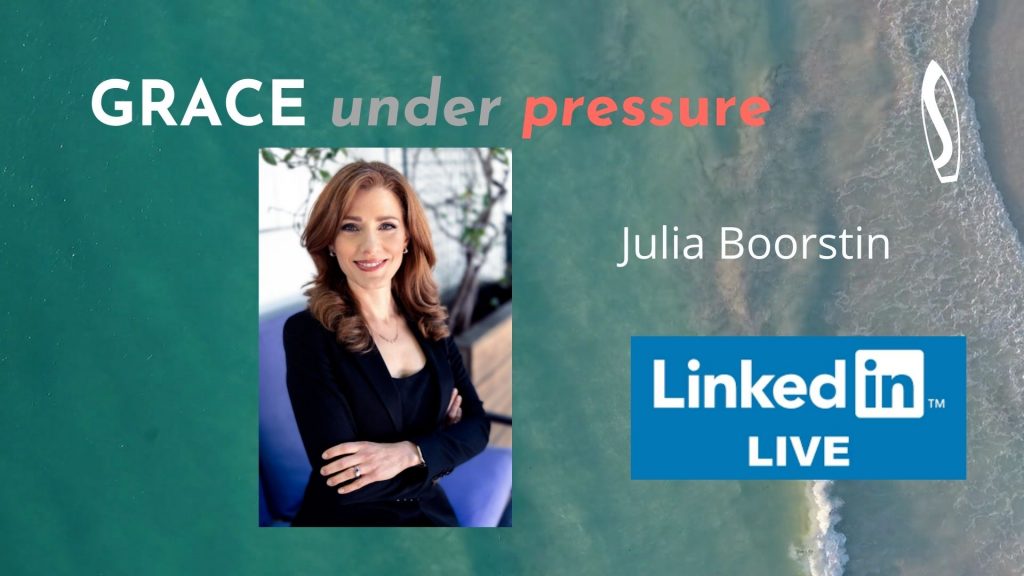
What struck journalist Julia Boorstin as interesting when researching her book, When Women Lead, was not how underrepresented women were but rather how successful they were when given the opportunity. “When women have defied the odds, their leadership skills and strategies have made them exceptional and offer a lot for everyone to learn from. I think that we should have more women in leadership positions because all the data indicates they do better.”

Boorstin, who has reported for CNBC since 2006 and before that for Fortune magazine, interviewed over 120 women for When Women Lead: What They Can Achieve, Why They Succeed, and How We Can Learn from Them. “What I saw is that every woman I had I interviewed had a growth mindset. These women had the balance of humility and confidence, humility to understand that they didn’t know everything they could keep on getting better.”

Understanding others

“Empathy is essential to understand how to lead people. You need to understand where they’re coming from,” Boorstin told me in a recent interview. And such an understanding opens the door to dealing not only with employees but also with key stakeholders like customers and investors. Empathy can lead to vulnerability, which Boorstin defines as “admitting what you don’t know, and that invites collaboration, and vulnerability is essential to elevate the potential of the people you’re working with.”

Contrary to some perceptions, says Boorstin, “women actually feel more comfortable demonstrating vulnerability.” While some may fear showing weakness, vulnerability can be liberating. Moreover, it enables women leaders to seek help from outside sources. For example, according to Boorstin, the global pandemic was the great interrupter for which no one had the answers. In that instance, the ability of women leaders to incorporate outside perspectives enabled them to help their organizations deal effectively with the crisis the pandemic provoked.

Practicing self-awareness

Boorstin noted that women leaders who had competed in athletics in high school or college used that experience to their advantage. “Athletes have a couple of advantages. First, they fail frequently. If you’re competing as an athlete, you’re getting out onto the field, and you’ll lose half the games on average unless you’re very, very on a very good team. But you get used to frequent failure.” 

Furthermore, says Boorstin, “women lead athletes are trained in self-competition. It’s not just about competing against another team. It’s not just about working at a team as a team. It’s about pushing yourself to compete on your own track. [And] understanding here’s how I did in this game, here’s how I failed, here’s what I need to work on to improve.”

This kind of self-awareness can lead to leadership awareness and the willingness to do after-action reviews of team and organizational performance. Additionally, because so few women are in senior leadership positions, they are “outsiders,” even in a leadership positions. This minority status gives them a different perspective they can utilize to improve their business, that is, see it differently from insiders. And if they leave for another job, they can apply a “fresh eyes” approach. They can be disruptors of the status quo to deliver value to others, especially customers.

Her book is not just for women, says Boorstin. “The reality is I wrote When Women Lead to be inspiring to women but to be helpful for men. Men need to be liberated to lead in their own ways as well. They shouldn’t have to feel like they have to fit themselves into a box of that old [practices]. Everyone has their strengths. Those all can be turned into leadership superpowers no matter what gender you are.”

Note: You can see my full interview with Julia Boorstin here on my LinkedIn Live show, Grace under pressure.

First posted on Forbes.com 00.00.2022
Why I Cheerlead for Those I Coach

A favorite word of mine in coaching is Brava! (Or Bravo for men)

For many, being coached is not fun. Discussing your performance and aspirations, including your plans for positive change, with a stranger takes gumption. While the coach is a willing listener, their role is to challenge your thinking so that you question your assumptions and come to new understandings of yourself. Whew!

That takes work, so when someone I am coaching achieves a milestone or comes to a new moment of awareness, I applaud them. I pride myself on being a cheerleader for those I coach.

Time and again, those I coach tell me how much they appreciate the fact that not only is someone listening but that someone is also reassuring them that they are on the right path. In this way, I am channeling the lessons of my later father, a family practice physician. He used to say that what he offered most was reassurance. That reassurance was founded on believing that my doctor understands my condition and will help me improve.

C for Coaching

Cheering does not preclude the other “C” words – conversing, challenging, and coaching. Let’s take them one at a time.

Conversations are dialogue between the coach and the individual. They open the door to understanding feedback gained from others and self-assessments. Conversations create windows into what the individual is thinking.

Challenging is the adversarial positioning that is sometimes required to provoke deep thought. It is the role of a coach to disrupt current perceptions—not because they are necessarily wrong—but because doing so opens the doors to deeper self-understanding.

Coaching is a catch-all term that can include advising, teaching and, more importantly, listening. As an advisor, the coach shares insights into a particular situation. As a teacher, the coach acts as an interlocutor to help the individual learn ways to think differently, communicate more clearly, manage more effectively and lead with greater understanding. 

When coaching embraces conversation and challenges—along with listening and observation—it opens the door for one more “C” word—congratulations. Give the individual credit for making positive change. This encouragement is especially critical at the beginning of the coaching engagement. Change does not occur overnight. It is often the result of a series of small steps that cumulatively add up to something grand.

 Cheering is not reserved just for coaches. It is a practice for managers, too. It is important to recognize progress and acknowledge effort and achievement. Cheering builds cohesion and camaraderie—both are essential to effective team performance.

Note to the wise.

If the amount of applause outweighs the coaching processes, you are likely not doing the individual any good. Your praise becomes either happy talk or sucking up. Neither is good coaching and may end up reinforcing the status quo.

Cheering the individual through coaching affirms their progress. It builds their self-esteem during the transition from where they are now to where they want to go. Making personal change is not always easy, so offering words of encouragement along the way goes a long way toward enabling the individual to feel better about themselves and their effort.

Cheers!

First posted on Smartbrief.com 00.00.2024

Rick Rubin: Manage Your Listening

By his own admission, he does not play an instrument well, run a mixing board expertly, or likely sing or dance. He spends part of his working day, flat on a couch in a recording studio control room, listening. He is Rick Rubin, one of the most successful record producers in the business. 

His style is reminiscent of another successful individual – John D. Rockefeller, who like Rubin, was a perceptive listener. As Ron Chernow noted in Titan, his biography on the oil man, Rockefeller would often enter a room where his directors or senior executives were meeting and lie down on a couch. While he appeared to be sleeping, periodically Rockefeller would offer a comment here or there, proving that he was listening and able to give advice, too.

The art of listening

Consider Rubin, a metaphysical listener. As he told Anderson Cooper on CBS 60 Minutes, Rubin does not care what the audience thinks; he cares about what his artists create. Here Rubin is channeling another man from an earlier era, Henry Ford, who famously said, “If I asked my customers what they wanted, they would have said a faster horse.”

Rubin’s gift is listening and bringing out the best in the musicians he works with. His style, nurtured by his meditation practice, is not directive but reflective. Rubin responds to what he hears and makes suggestions. For example, one artist noted that he gave her a homework assignment to write an essay about her music. Rubin’s approach does not intimidate but enables the artist to see something in their work that needed to be more evident to them initially.

Leaders of high-performing teams can learn from Rubin’s technique. And here are some suggestions.

Listen deeply. Managers are deluged with information. It requires great concentration to tune out the extraneous to focus on the present. When individuals and teams struggle with choices, they need an outside perspective. Make them comfortable. Listen to them explain their ideas. Smile as they explain. Above all, be patient.

Reflect on what you have heard. Too often, executives tend to jump in and make suggestions. If time is short, and a decision needs to be made, sure. But how much better would it be to lay back and reflect? Ask further questions. Convene another meeting. Do not rush.

Suggest, but do not impose. Executives are hired to move projects along, and so their advice is to be expected. However, better to suggest than set. Let people build on what you say so they take ownership of it. Dwight Eisenhower used this technique as Supreme Commander in Europe and later as President. Suggest and let people build upon what you offer.

Rinse and repeat. Listen, reflect, suggest. Finally, integrate the process into your management style. It will be a way to bring out the best in others.

Discipline matters

Management, of course, is not art; it is the discipline of getting things done. And executives have every right to make changes, even if employees do not like them. However, the better choice is to enable others to see what you see so they can bring out the best in themselves. 

Doing so makes them true to themselves and in the process, successful contributors to the enterprise.

First posted on SmartBrief.com 2.23.2023

Be Comfortable in Your Own Skin

“He knew who he was, and he liked who he was. He liked Harry Truman. He enjoyed being Harry Truman.”

That is a description that Truman’s biographer, David McCullough, uses in an essay in the book Character Above All. For Truman, who had little growing up, never went to college, wore “coke bottle” glasses, played the piano and worked hard as a farmer, character may have been his strongest suit. And it suited him as well as the suits he wore – having been a haberdasher (albeit a failed one).

Test Under Fire

McCullough writes that Truman’s appreciation of himself was not a matter of hubris or arrogance. It was that he knew who he was and what he could do. The litmus test that marked him for life was his service as a middle-aged man serving in the U.S. Army as Captain of Battery D during the Great War. In their letters to their wife, Bess, Truman describes his first night under fire in harrowing terms; he was frightened, as were his men. But he rallied, pulled himself together and got his men, who had run from the fight, to regroup—courage under fire.

Although Truman entered public service as part of the corrupt Pendergrass Machine in his home state of Missouri, he did not enrich himself but gained a seat in the U.S. Senate. Truman made a name for himself as the crusading senator investigating war profiteering during World War II. He became Franklin Roosevelt’s running mate, and when Roosevelt died shortly after beginning his fourth term, Truman became President. 

Small Stature Big Character

Truman, who had not known just how ill FDR was, told reporters the day he was sworn in that he “felt like the moon, the stars, and all the planets had fallen on me.” Truman bore the weight admirably. He shepherded the nation through the final days of the war in Europe and later Japan – when it was his call to drop the atomic bomb on Japan. 

As McCullough writes, Truman was wedged between two giants of American history – FDR and Dwight Eisenhower, the General who had commanded Allied Forces in Europe. Truman never projected the gravitas of either man. He was often dismissed by his own Democratic Party and his mother-in-law, who felt her daughter could have married better. A couple of sayings sum up popular opinion of the man – “I’m just mild about Harry” and “To err is Truman.”

No matter, Truman knew himself and was steadfast in pursuing his own course, including winning the 1948 presidential election when his opponent, Thomas Dewey, the popular governor of New York, was favored by everyone—except the voters.

Mastering Self-Awareness 

The lesson leaders can learn from Truman is to be comfortable in their own skin, meaning to know their strengths and weaknesses. “Give ‘em hell, Harry” was a more favorable adage for Truman as he excoriated the “Do Nothing Congress” of 1947-48.

Truman did find a way to vent his irritation and anger. He would write a scorching letter, then set it aside and often not send it. Abraham Lincoln also followed this practice.

His temper, however, was not directed at staff. As McCullough notes, everyone who worked with him loved him, including one Secret Service officer who said that if he could have picked someone to be his father, it would be Truman. 

Self-knowledge, coupled with self-awareness, is essential to anyone in charge. It is necessary to have an ego, but it is equally important to keep it in check. Sam Rayburn, a friend of Truman’s and the long-time Democratic Speaker of the House, warned Truman shortly after he became President to be wary of people seeking favors, especially those seeking to flatter him. “They’ll come sliding in,” said Rayburn, “and tell you you’re the greatest man alive. But you know, and I know, you ain’t.”

This raises another point. Make certain that if you reach the top rung, you surround yourself with people who knew you when… when you had very little, but like Harry Truman, a will to persevere and a commitment to doing what it takes to make things better.

First posted on Forbes.com 00.00.2024

Teaching As You Lead

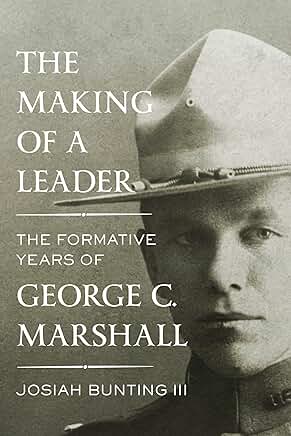
If I were to coach an executive about assuming a very senior leadership role, I would recommend they read The Making of a Leader: The Formative Years of George C. Marshall by Josiah Bunting III. Specifically, I would have them focus on a very short chapter simply titled “Teacher”—the only chapter. 

Author Bunting, himself a former Army officer and noted historian, tells of the time that Marshall, during his command of an infantry battalion in China in 1927, came across a young lieutenant, a highly-ranked Fort Benning graduate struggling to write an order. The young man—himself a Fort Benning graduate—was twisted into knots attempting to write the “formulaic rigamarole he had been taught.” 

Teacher as transformer

Marshall said, “I wanted to get my hands on Benning.” And he did, and in the process, he transformed military education, ripping away the formulas and enabling officers to think for themselves in alignment with strategic intent. This approach was one that senior officers of World War II—all of whom passed through Benning—had to be flexible and adaptable to changing conditions, that is, the very nature of combat itself.

Winston Churchill credited Marshall as the “great organizer” of the wartime effort, but he was much more than that. He was the mobilizer who engaged troops from top to bottom, which is how he led at Benning. He was a whirlwind of energy, in part to compensate for the grief he felt at the death of his first wife. 

Marshall would drop into lectures to observe, organized exercises in the field, and insisted that his officers socialize after hours to build camaraderie. As commander later in later posts, Bunting refers to Marshall as a “paterfamilia” – looking out for the welfare of his officers and their troops. And since wages were low, he would arrange for troops to purchase local foods at subsidized pricing, an ad hoc PX. Morale was critical to welfare, and when calling up soldiers before World War II, he insisted on providing the men (mostly men) access to entertainment. (This effort led to the development of the USO, which entertains troops worldwide to this day.)

Next generation developer

There is a lot of literature about Marshall, but this book focuses on his development as a leader, observer, learner, teacher and eventual “headmaster” of the U.S. Army. Marshall was responsible for choosing and developing the generals who commanded U.S. forces in Europe: Omar Bradley, George Patton, and Mark Clark. 

Having served as General Pershing’s chief of staff in France in World War I, Marshall would have wanted more than anything to command the Allied Forces in World War II. President Roosevelt wanted – and frankly needed – Marshall at the Pentagon. And so the job was awarded – with Marshall’s full support — to Dwight Eisenhower, another general Marshall had identified and developed for high command.

Man for peace

Marshall was military to his core, but it needs to be noted that he was awarded the Nobel Prize for Peace for his efforts to rebuild a devastated Europe based upon the plan that bears his name. Only a man who was insightful about the human condition—and one who had experienced war first-hand—could realize how important it was to create conditions for peace to prevail. 

Bunting, who has emphasized literature and humanities as a university educator, brings Marshall’s development to life with expert storytelling and exquisite prose. Bunting’s vocabulary is as wide-ranging as Marshall’s own hunger for learning. The leadership lessons imparted will enable anyone seeking to “lead big” to learn to “lead small”—taking care of those who depend upon you for direction, counsel and compassion. 

Note: For further information about Marshall as U.S. Army Chief of Staff and as Secretary of State I recommend the biographies by Forrest C. Pogue (George C. Marshall: Education of a General) and Ed Cary (George C. Marshall: Solider and Stateman).

First posted on Forbes.com 8.01.2024

Baseball’s Work-Life Lessons


I love baseball.

But I am not blind to its condition.

A recent article in The Economist delineated the woes facing Major League Baseball. 

According to Commissioner Rob Manfred, the league lost $2 billion last year due to ballpark closures due to the pandemic. Fans are back at the stadium this year, but for how long? Delta variant may cause a thinner or a non-existent crowd. If so, it will mean another year of diminished revenues just as the league begins another round of collective bargaining with the players. Billionaires versus millionaires, as sports wags like to say. Little sympathy for either.

The league recently banned sprays that could improve a pitcher’s grip on the ball. This move was an effort to rejuvenate offensive production that has fallen recently. Some fans find the game much too slow; the average game lasts three hours, as much 50% as much longer as it did a generation or two ago. 

Among Gen-Z fans, only 32% said they were “casual fans.” By contrast, 50% of adults say they are fans of Major League Baseball. Young fans dig e-sports, and older fans have other sporting distractions: football, basketball, hockey, golf, and even European football (soccer). Yet, Jacob Pomrenke of American Baseball Research told The Economist, “The idea that baseball was somehow better in the past is one we should throw by the wayside. The golden era of baseball is now.” 

What baseball teaches

So much for griping. What fascinates me about the professional game is its similarity to life itself. Players come together to train in February and stick together as a team until the end of September or October if they make a playoff run. That’s a long time of living and working together. 

The game teaches us three things

Endurance. To play a nine-month season, you need to be physically fit. You must maintain your weight and stamina through coast-to-coast travel, hotels, night games, and hot, humid weather. (Not mention piercing cold in spring and fall). You also have to get along with players you may not like personally but need to work with because they are essential to a team’s ability to compete.

Resilience. Few, if any players, make it through a season unhurt. While they may not suffer a season-ending injury, every player plays through aching muscles, fatigue, and diminishing mental focus. Resilience is that ability to bend but break and emerge more robust and maybe wiser after being flattened by adversity.

Patience. The slump. The most dreaded word in baseball. Hitters suddenly cannot hit. Pitchers cannot throw strikes. Hitters say that when they are hot, the baseball looks like a grapefruit. When they are cold, they see BB’s. Pitchers who could break a curve leave it hanging. And fastballs lose their zip. What is required, in addition to the resilience above, is patience. Bid your time. Stay focused. You can work yourself back into the game.

The long game

The major league game has been played professionally since 1869, when a team from Cincinnati donned red stockings. It has survived wars, depressions, and pandemics. So it will survive today’s woes, but changes must be made, especially in the length of time it takes to complete a game.

But there is one bright light: Shohei Ohtani. Imported directly from Japan, Ohtani is the first true pitching slugger since Babe Ruth. Ruth was a pitcher (and an occasional batter) for the Boston Red Sox and an exceptional one before he was traded to the New York Yankees in 1920. There, Ruth, as a batter, invigorated the game with a new brand of baseball: the home run.

What Ohtani accomplishes this year, or in the future, is speculation. Already he is on pace to hit more home runs in one season than any other pitcher did in his entire career (save Ruth).* And I can tell you one thing. I’ll be watching. I love the game. And its lessons.

*Note: Pitcher Wes Ferrell hit 37 in his major league career.

Adapted from Forbes.com 7/30/2021